

How Leaps & Bounds Can Help Shoulder Pain
Have you been experiencing an achy sensation in your arm? Are you having issues getting to sleep at night or problems lifting things? If these symptoms sound familiar, you might have a rotator cuff injury or neck pain. At Leaps & Bounds Performance Rehab, our practitioners can help figure out what is causing your symptoms and how to resolve them once and for all!
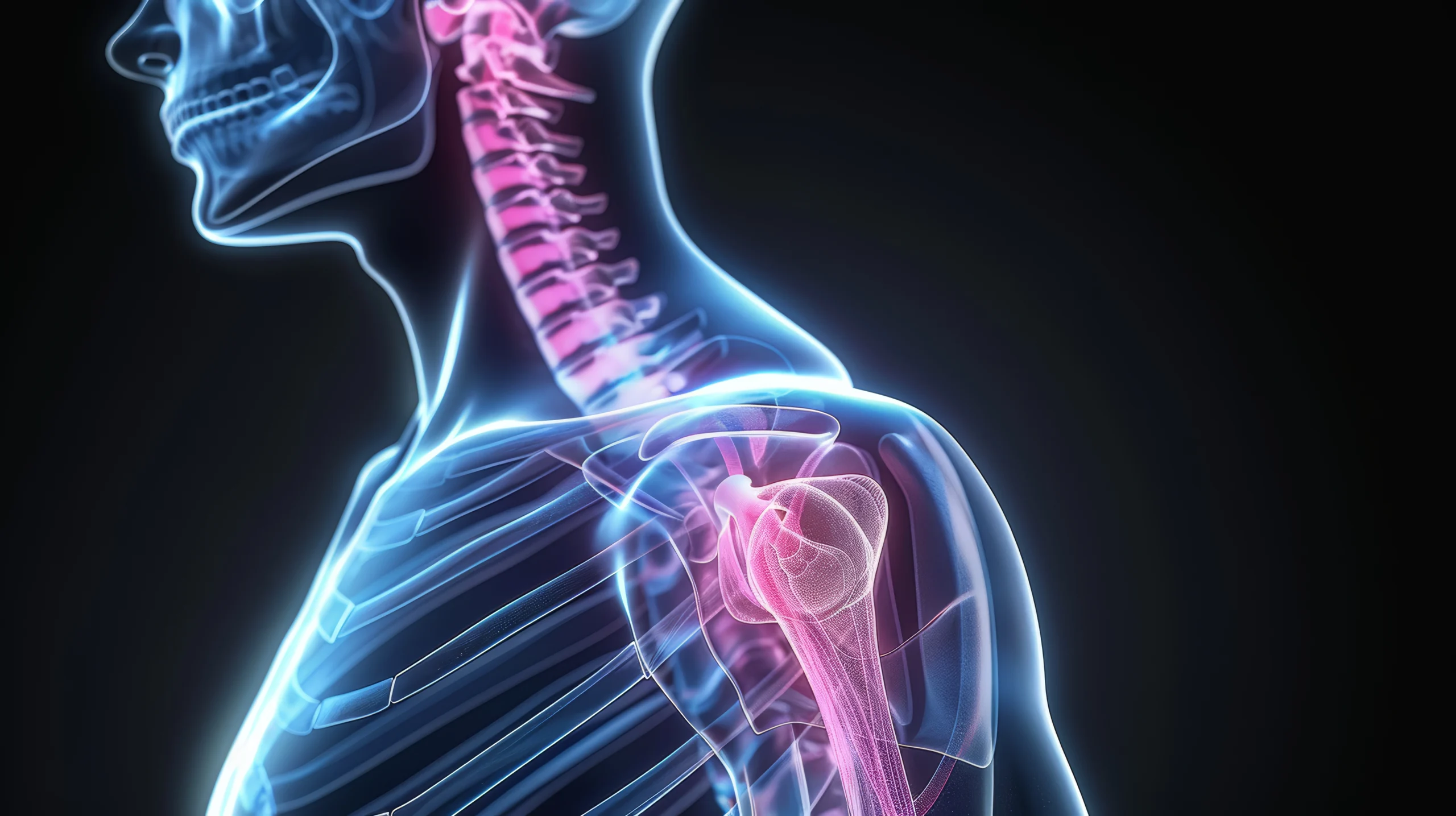
The rotator cuff comprises muscles and tendons that help keep the shoulder in place and moving correctly. People experiencing rotator cuff injuries typically report feeling a painful, dull ache deep in their shoulder or trouble getting a good night’s sleep due to pain. Some people experience difficulty reaching behind their backs or weakness in their arm especially reaching to the side or overhead.
All too often, the source of the problem lies in the neck; a condition referred to as cervical radiculopathy. An irritated nerve in the neck can also lead to pain in the shoulder. Symptoms also include pain, weakness, and difficulty sleeping. These symptoms can be similar to those experienced by someone with a torn shoulder/rotator cuff injury.
At Leaps & Bounds Performance Rehab, we offer effective, non-invasive methods of therapy that can help relieve your shoulder pain and heal your rotator cuff injury and/or neck pain. If you think you may have a rotator cuff injury or neck issues, contact our clinic and set up an appointment today!
How to tell if it is a rotator cuff issue or a pinched nerve
Although some symptoms of these conditions are similar, there are ways to differentiate between rotator cuff injury and cervical radiculopathy. Typically, a pinched nerve will cause pain due to neck movements and positions, whereas a rotator cuff injury is associated with shoulder movements and positions.
Ways to distinguish rotator cuff injury from neck pain include:
- Quality of Pain: Rotator cuff tends to be dull at rest and can be sharp with specific movements on the shoulder/arm. The neck tends to have sharp pain at rest and movements of the neck and/or positions that stretch the nerve, resulting in more pain. Moving the neck rarely affects the rotator cuff symptoms.
- Location of pain: People with rotator cuff injuries often experience pain in the shoulder itself, typically on the outer aspect of the shoulder.
The location of the neck pain typically starts in the neck or shoulder blade. Most of the time, shoulder blade pain is a sign that your symptoms are coming from the neck. Although the rotator cuff pain can travel down into the arm in severe cases, it rarely affects the hand. In contrast, a nerve condition will affect the hand along with the distribution of the nerve root that is irritated. (This means pain in particular fingers).
- Movements affecting pain: Rotator cuff injuries affect movements performed by the injured muscle. Symptoms coming from the neck are produced or intensified by turning your head or looking up/down.
- Weakness: The most common movements affected by a rotator cuff injury are reaching to the side or overhead.
With cervical radiculopathy, you may find that your shoulder joint feels extremely weak and useless as you attempt to lift something. In some cases, these symptoms extend from your shoulder down through your arm and hand, so it might even be difficult for you to grasp items as you usually would.
Relief for shoulder pain
Regardless of whether your pain is caused by a torn rotator cuff or cervical radiculopathy, Leaps & Bounds Performance Rehab is a great option to abolish pain, restore motion and improve your strength in your shoulders and neck.
Your practitioner will assess your pain condition, create a customized treatment plan for your needs, and teach you exercises and targeted stretches to improve your range of motion and reduce your pain. In addition, a comprehensive strengthening program to ensure a total return of the function to the injured shoulder.
Your therapist will also inform you of things you should avoid doing to keep from reinjuring yourself and experiencing shoulder pain again down the road. For example, if you play sports, they may advise you to take frequent breaks to reduce the amount you are using your shoulder. If your neck is the issue, learning about postures and what activities to avoid or modify will be essential for your outcome.
Shoulder pain is a common condition that can easily be diagnosed and treated, so don’t hold out on seeing a member of our team because you’re hoping the pain will go away on its own! It is essential to have your condition evaluated. That way, you will know for sure if the problem is a torn rotator cuff, a pinched nerve, or something else entirely.

Staff Spotlight
Anthony Beilin, Physiotherapist

Anthony is a resident physiotherapist who completed his Master of Science in Physical Therapy (MScPT) at Queen’s University. Before pursuing his master’s, Anthony completed his undergraduate degree at Western University where he finished the Bachelor of Medical Sciences (BMSc) program. Anthony has always had a passion for the sciences, taking particular interest in anatomy and physiology. Beyond the classroom, Anthony has diverse experiences across a number of different cohorts, ranging from university level triathletes and swimmers to amateur level racket sports players and geriatric clients living in retirement and long-term care homes. With every client that walks through the door, Anthony aims to learn about each person’s particular experience and how he can tailor his treatment approach to meet their needs.
In his practice, Anthony strives to bring maximal value to every client he works with. His treatment philosophy is centered around active methods of treatment (individualized exercise prescription), client education, as well as manual techniques. Collectively, these approaches create a comprehensive treatment model that maximizes client independence and helps them get out of pain and back to their meaningful activities.
Outside of work, Anthony loves being active, playing tennis and working out, enjoys travelling within and outside of Canada, exploring new coffee shops as well as enjoys a great show and book! Anthony is happy to help his clients reach their health goals and is offering his services in both English and Russian!
Request an appointment at Leaps & Bounds today
Put an end to your problems today. Call Leaps & Bounds Performance Rehab today and get scheduled for your very own consultation with one of our skilled practitioners. Our team will assess your condition, find the root of your pain problem, and set you on the right track to ditching your pain once and for all!

Help Us Help Our Community
This month we will be raising money for the Oakville Hospital Foundation! We will donate $10 for every Google review we receive!
We donated $550 to local charities based on reviews last year alone. So, if you are a long-time client of ours and have received exceptional service with a great outcome, please consider leaving us a review.

Easy Sausage & Herb Stuffing
- 8 cups (400g) store-bought unseasoned stuffing cubes
- 1 stick (½ cup) unsalted butter
- 1½ cups diced yellow onion (from 1 large or 2 small onions)
- 1 cup diced celery (from 3 large celery stalks)
- 4 garlic cloves, finely chopped
- 1 pound bulk sweet Italian sausage (i.e., sausage with the casings removed)
- 2¾ cups low sodium chicken broth
- 1 large egg, beaten
- 1 tablespoon fresh chopped rosemary
- 1 tablespoon fresh chopped sage
- ¼ cup fresh chopped parsley
- ½ teaspoon salt
- ½ teaspoon freshly ground black pepper
- Preheat the oven to 350°F. Grease a 9 x 13-inch baking dish with butter.
- Place the stuffing cubes in a large mixing bowl.
- In a large sauté pan, melt the butter. Add the onions and celery and cook over medium heat, stirring occasionally, for about 8 minutes, or until the vegetables are soft. Add the garlic and cook 2 minutes more. Add the vegetables to the stuffing cubes. (Don’t wash the pan but scrape out every last bit of vegetables, otherwise they will burn in the next step.)
- In the same pan, cook the sausage over medium heat for 8-10 minutes, until browned and cooked through, breaking up the sausage with a metal spatula while cooking (the largest pieces should be no greater than ¼-inch). Add the browned sausage and fat to the bread cubes and vegetables.
- Add the chicken broth, egg, rosemary, sage, parsley, salt and pepper to the bread cube mixture and mix until the bread is soft and moistened. Transfer the stuffing to the prepared baking dish and bake for 65-75 minutes, uncovered, until deeply golden and crisp on top.