

A Multidisciplinary Approach to Managing Frozen Shoulder
We recently worked with a patient who came to us after struggling with shoulder pain for several months. While she hoped it would go away on its own, it only got worse over time. When she visited us, she was also struggling to lift her shoulder overhead or reach behind her back.
This patient had developed adhesive capsulitis, more commonly known as frozen shoulder. It gets that name from the fact that the condition causes the shoulder to “freeze up” after a period of intense pain. A frozen shoulder will eventually “unfreeze,” but that process can take anywhere from 1-3 years. Fortunately, the integrated team at Leaps & Bounds blends physiotherapy, chiropractic care, and massage to help you manage your symptoms and facilitate a more efficient recovery.
We’ve Been Nominated for Best Physiotherapy Clinic—Cast Your Vote and Help Us Win!
We’re honored to be nominated for Best Physiotherapy Clinic—and we’d love your support! 🏆 Your vote means the world to our team and helps us continue doing what we love most: helping our community move, heal, and thrive. Simply click the button below, find Best Physiotherapy Clinic, and cast your vote for us. Thank you for being a part of our journey and for trusting us with your care! ❤️
Notice to our patients
Updated Fees & Fee Structure Effective 1st September 2025
Dear Valued Patient,
We are committed to providing you with the highest quality of care and service. In order to maintain this standard, it is necessary to adjust our fees to reflect increases in operational and treatment costs.
Effective 1st September 2025, our updated fee schedule and revised fee hierarchy will apply. This change ensures that we can continue to offer the same level of professional care, maintain modern equipment and technology, and attract and retain skilled staff.
For patients currently undergoing treatment: If you are in the middle of an existing treatment plan (have received treatment during August 2025), you will continue to be charged at your current rates until 1st October 2025, after which the updated fees will apply. The updated fee hierarchy will be available at our Front Desk. If you have any questions about the changes or how they may apply to you, please let our friendly team know — we’re here to help.
Thank you for your trust and ongoing support.
Warm regards,
Your LAB’s Rehab Team

What Causes Frozen Shoulder?
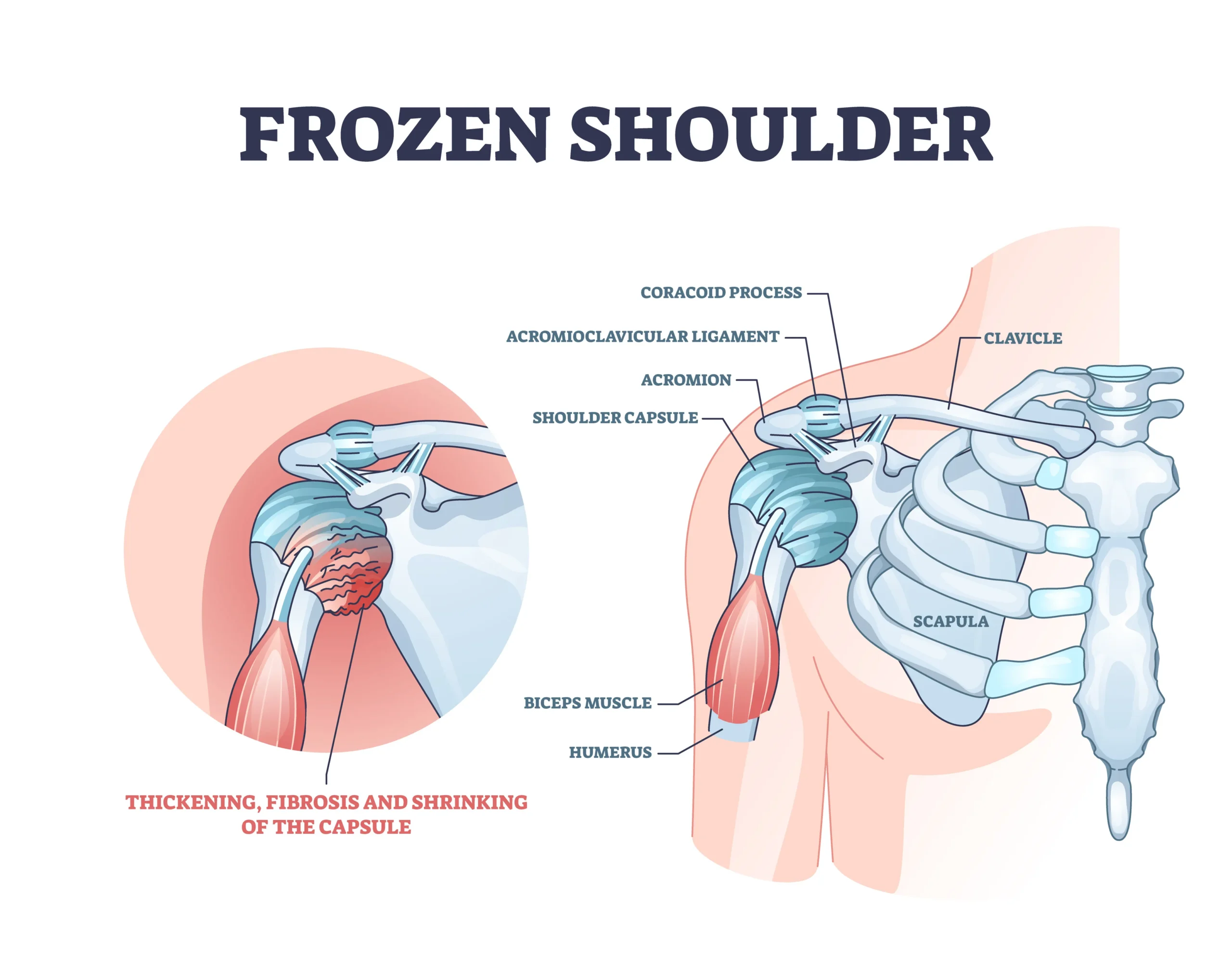
The condition develops when the capsule of connective tissue that wraps around your shoulder thickens and tightens, restricting the joint. However, researchers aren’t entirely clear why this happens. Certain factors can increase your risk:
- Being a woman between the age of 40 and 60 years old
- Having certain diseases, including diabetes, thyroid conditions, or cardiovascular disease
- Immobilizing your shoulder after an injury or surgery
Freezing Phase
Duration: Anywhere from 6 weeks to 9 months
This initial stage is marked by increasing pain and stiffness in the shoulder. During this phase, we focus on maintaining your shoulder’s range of motion to help reduce stiffness and improve comfort.
Symptoms
- A gradual onset of pain that worsens with movement
- Increased stiffness in the shoulder
- Pain is often worse at night, disrupting sleep
Frozen Phase
Duration: Anywhere from 4 to 6 months
The frozen stage involves less pain but greater stiffness, significantly restricting your shoulder’s movement. We’ll focus on improving your shoulder’s mobility using stretching or manual therapy techniques.
Symptoms
- Decreased pain compared to the freezing stage
- Significant stiffness and difficulty moving the shoulder
- Everyday movements like reaching overhead or behind the back become challenging
Thawing Phase
Duration: Anywhere from 6 months to 2 years
In the final stage, your pain decreases, and your shoulder’s range of motion gradually returns. However, it’s important to continue treatment to ensure you make a full recovery.
Symptoms
- Gradual improvement in mobility as scar tissue around the shoulder capsule begins to loosen and break down
- Pain continues to decrease
Our Patients Are Getting Results
“Andrew was amazing! I had gone elsewhere to cure my shoulder issues, used up all my benefits, but got no improvement. Went to Andrew, he looked past the injury, found the root cause and got me back to baseball in a very short time. I would highly recommend him to anyone!” – Lise D
Managing Frozen Shoulder: What You Need to Know
Our team offers several techniques to help you manage frozen shoulder symptoms at all three stages. We’ll work with you to develop a comprehensive treatment program based on your current symptoms:
- Acute Pain Management: We’ll help you manage shoulder pain (especially in the freezing phase) with techniques such as dry needling, acupuncture, or trigger point release.
- Adjustments and Mobilizations: Various hands-on techniques can gently mobilize the shoulder joint, improve joint capsule movement, and reduce pain.
- Mobility Exercises: Targeted exercises and techniques help improve your shoulder’s range of motion in all directions, gradually restoring your ability to reach, lift, and rotate your arm.
- Strengthening Exercises: Strengthening the muscles surrounding the shoulder joint enhances stability and supports improved function.
- Management Strategies: Understanding frozen shoulder is an integral part of managing it. We’ll help you navigate the difficulties of the condition, including identifying which stage you’re in and providing you with home exercises to help alleviate your symptoms.
Don’t Let Frozen Shoulder Keep You Down
If you suspect you have a frozen shoulder, schedule an appointment at Leaps & Bounds. A program blending techniques from physiotherapy, chiropractic care, and massage therapy can help you manage the condition in all three phases. Plus, the earlier you can begin treatment, the better your outcomes will be. Our team is here to help you manage pain, restore mobility, and understand your shoulder’s movement patterns. Don’t let frozen shoulder hold you back. Call us today to schedule your initial appointment!

Help Us Help Our Community
This month we will be raising money for the Oakville Fareshare Foodbank! We will donate $10 for every Google review we receive!
Our Caring Team Is Here For You

Andrew Convery, BAHSc Hons AT, CSEP-PT
Certified Athletic Therapist (C)

Carolina Rotondo, MPT, Hons BSc, Cert MDT
Registered Physiotherapist

Christina Camilleri, RMT, BAHSc Hons AT
Certified Athletic Therapist (C), Registered Massage Therapist

Dr. Roslyn Eng, DC, Hons BSc Kin
Doctor of Chiropractic

Michelle Davies
Client Experience Manager

Onika Green, Cert MPC, MHK
Mental Performance Consultant

Pat Stanziano, MPT, Hons BScKin, Cert MDT, Dip Sport Physio
Registered Physiotherapist, Sport Physiotherapist

Thomas Stavro Sholdoff, MscPT, Hons BA Kin
Registered Physiotherapist
Recipe of the Month: Egg Roll in a Bowl

Ingredients:
- 1 lb ground turkey or chicken
- ¼ cup yellow onion, chopped
- 3 cloves garlic, minced
- 2 teaspoons fresh ginger, grated or minced
- 1 12-14 oz package coleslaw mix
- ¼ cup low-sodium soy sauce, tamari or coconut aminos
- 2 teaspoons toasted sesame oil
- 1-2 teaspoons sriracha or sambal oelek
- 2 green onions, sliced
- sriracha, for serving (optional)
- sesame seeds and chopped cilantro, for garnish
- cooked cauliflower rice, for serving (optional)
Instructions:
- Heat a large skillet over medium-high heat. Add ground meat and cook until no longer pink, about 5-6 minutes. While cooking, break meat into smaller pieces using a wooden spoon or spatula and season liberally with salt and pepper.
- Add onion, garlic, ginger, coleslaw mix, soy sauce, sesame oil and sriracha to the skillet. Cook for another 5 minutes or so, until cabbage is tender. Taste and add more soy sauce or sriracha, if needed.
- Portion mixture into bowls and top with green onions, sesame seeds and cilantro. Serve with additional soy sauce, sriracha or chili crisp, if desired.